Kebaya: Discover the Timeless Elegance of Indonesian Heritage
29 September 2026 04:59:04 / / Hits : 135 / Posted by Administrator
Kebaya: Discover the Timeless Elegance of Indonesian Heritage
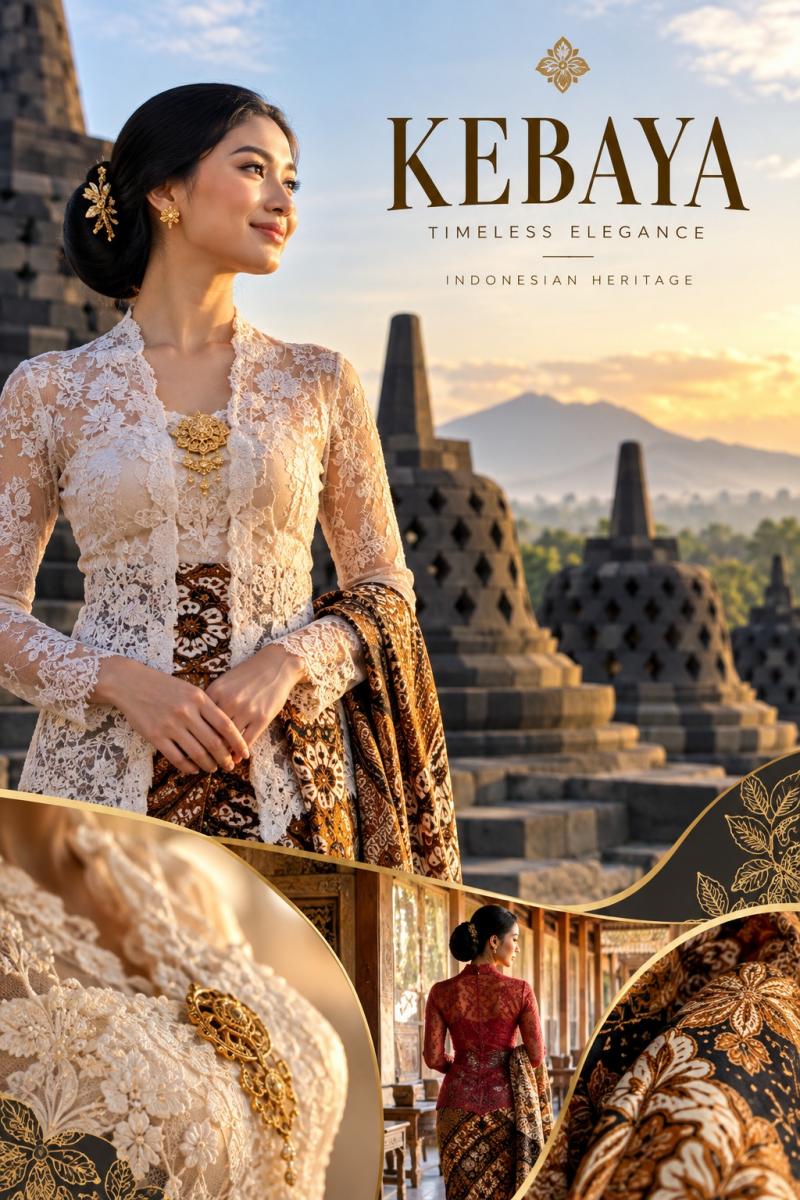
Kebaya is one of the most distinctive traditional garments worn by women in the Indonesian archipelago and across Southeast Asia. Elegant, graceful, and rich in cultural meaning, the kebaya has been an important part of traditional dress for generations.
The History of Kebaya
The history of the kebaya cannot be attributed to a single region or country. Its form and traditions developed over centuries through the cultural exchanges that took place throughout the Indonesian archipelago and Southeast Asia.
In Indonesia, the kebaya developed distinctive regional styles. In Java, for example, it became an important part of traditional women’s clothing and is traditionally worn with a batik or jarik cloth.
In the royal courts of Yogyakarta and Surakarta, the kebaya became an important element of traditional Javanese dress. The way the kebaya, batik cloth, and accessories are worn can reflect cultural traditions and the occasion.
Regional Diversity of the Kebaya in Indonesia
Different regions of Indonesia have developed their own distinctive styles of kebaya, including:
• Javanese and Yogyakarta Kebaya – known for its elegant appearance and traditional combination with batik or jarik cloth.
• Sundanese Kebaya – reflecting the cultural traditions of West Java.
• Balinese Kebaya – widely worn during traditional ceremonies and religious occasions.
• Betawi Kebaya – including the famous Kebaya Encim, which reflects Peranakan Chinese cultural influences.
• Other regional styles – each reflecting the history, traditions, and cultural identity of its community.
Kebaya Across Southeast Asia
The kebaya is also found in several Southeast Asian countries, including Malaysia, Singapore, Brunei Darussalam, and Thailand, where it has developed distinctive local characteristics.
In particular, within Peranakan culture, the kebaya evolved into an important expression of cultural identity and is widely known as the Nyonya kebaya.
This shared history illustrates the close cultural connections that have existed among communities across Southeast Asia for centuries.
Kebaya as Intangible Cultural Heritage
In 2024, UNESCO inscribed Kebaya on the Representative List of the Intangible Cultural Heritage of Humanity through a multinational nomination involving Brunei Darussalam, Indonesia, Malaysia, Singapore, and Thailand.
This recognition highlights that the kebaya is more than simply a traditional garment. It represents cultural knowledge, craftsmanship, traditions, identity, and heritage passed down from one generation to the next.
Kebaya and Indonesian Cultural Identity
In Indonesia, the kebaya continues to evolve with changing times. Today, it is worn not only for traditional ceremonies and formal occasions but also serves as an inspiration for contemporary fashion designers.
Although its styles have changed over time, the kebaya continues to represent elegance, cultural identity, and the rich heritage of the Indonesian archipelago.
A Living Tradition
The kebaya is more than a piece of traditional clothing. Behind its fabric, embroidery, patterns, and distinctive way of wearing it lies a story of history, cultural exchange, and the diversity of the Indonesian archipelago.
From generations past to modern fashion today, the kebaya remains a living tradition and an enduring symbol of the rich cultural heritage of Indonesia and Southeast Asia.
Tags : kebaya yogyakarta, traditional dress yogyakarta, javanese culture, indonesian culture, cultural experience yogyakarta, traditional clothing borobudur, yogyakarta cultural heritage
Berita Lainnya :




.png)












 BANK MANDIRI
 Transfer Wise
 Pay Pal
 E-WALLET
 CREDIT CARD